Bruine Bonen met Spek (Brown Beans with Bacon)
Bruine Bonen met Spek
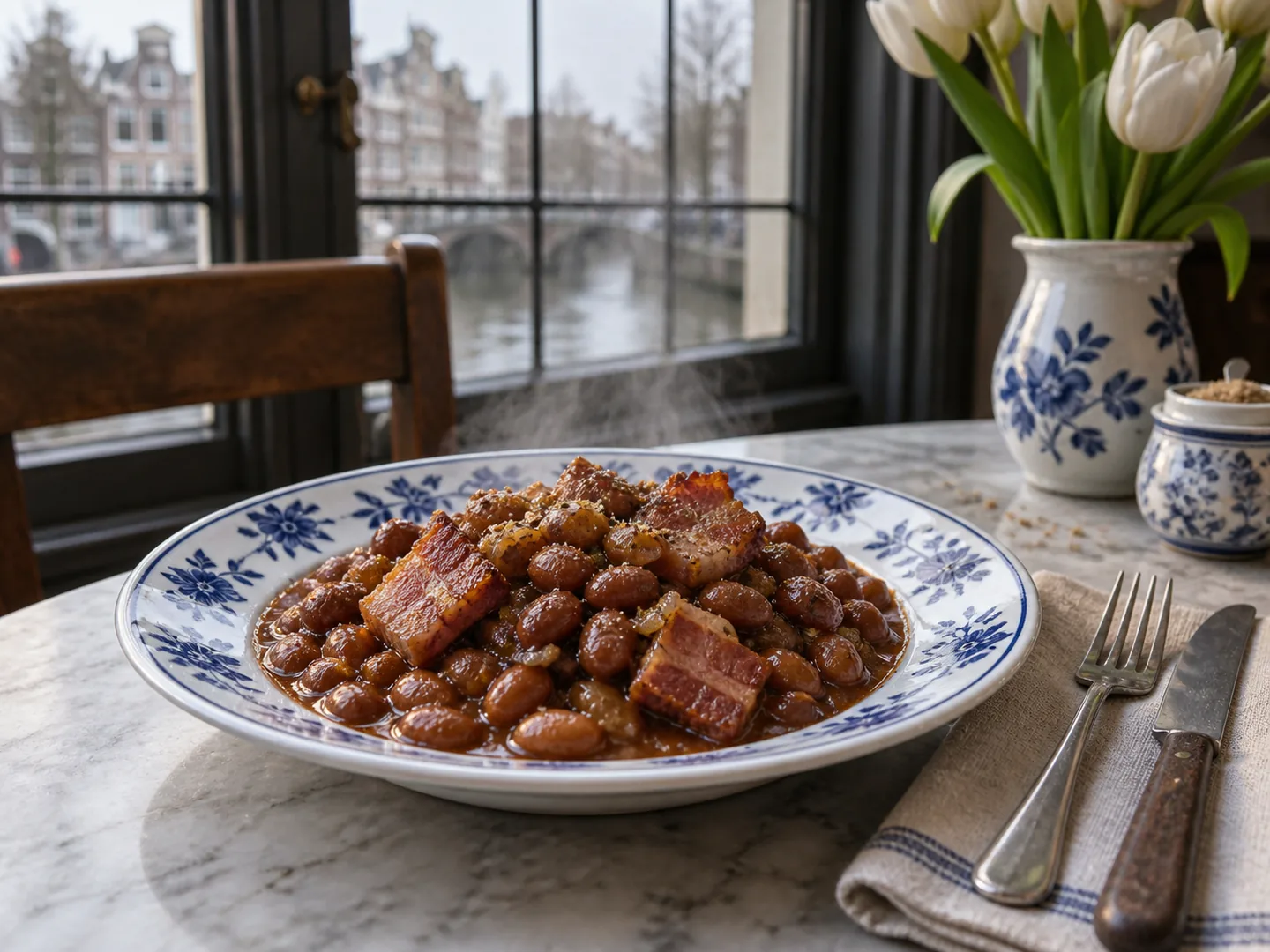
The Dutch brown-bean pot: dried bruine bonen slow-simmered with smoked bacon and onion, finished sweet-sour with syrup and vinegar. Deep winter thrift food.
 IIIStews & Braises
- Prep
- 20 min
- Cook
- 120 min
- Serves
- 4
- Level
- Beginner
Bruine bonen met spek is deep-winter thrift food, the pot that made a filling meal out of a bag of dried beans and a piece of smoked bacon. Brown beans (small, tan, earthy) are one of the oldest staples of the Dutch larder, cheap protein that kept through the cold months when little grew, and simmered soft with bacon and onion they become one of the most quietly satisfying dishes in the repertoire. It is nineteenth-century household cooking, the kind codified in the frugal manuals that taught plain, nourishing meals.
The patience of dried beans
Cooking from dried is where the flavour lives, and it rewards a little care. An overnight soak and a long, unsalted simmer are non-negotiable: salt added too early tightens the skins and leaves the beans stubbornly hard however long they cook. Given fresh water, a bay leaf and time, they turn creamy inside and hold their shape outside: the ideal texture to carry the smoke of the bacon and the sweetness of the onions.
A bag of dried beans and a hank of smoked bacon: winter food from a country that learned to store the summer.
The sweet-sour signature
What turns this from a plain bean pot into something recognisably Dutch is the finish. A spoon of appelstroop or brown sugar, a splash of vinegar, and a little mustard pull the earthy beans and salty bacon into the sweet-sour balance that runs like a thread through this whole cuisine, from hachee to zuurvlees. Keep some of the rendered bacon crisp to scatter over the top, serve it with boiled potatoes or good bread, and you have a bowl that tastes of Dutch thrift at its most generous.
“Never salt dried beans until they are already tender. Salt too soon and they fight you, staying stubbornly hard no matter how long they cook.”
Ingredients
Serves 4
The beans
- 400 gdried brown beans, bruine bonen, soaked overnight
- 1bay leaf
- 1onion, whole, peeled
- 1.5 litreswater, for cooking
The pot
- 250 gsmoked bacon, in lardons
- 2onions, chopped
- 1 tbspappelstroop or brown sugar
- 2 tbspwine vinegar
- 1 tspmustard
- to tastesalt and pepper
Method
- 1
Soak and cook the beans
Soak the beans overnight in plenty of cold water, then drain. Simmer them with the bay and the whole onion in fresh unsalted water for about 75 minutes, until tender. Salt added too early keeps dried beans tough.
- 2
Render the bacon
While the beans cook, render the bacon lardons slowly in a dry pan until the fat runs and the edges crisp. Lift out half the bacon to keep crisp for the top and leave the rest, with its fat, in the pan.
- 3
Soften the onions
Cook the chopped onions in the bacon fat until soft and golden. This sweet, savoury base is what lifts the beans from plain to comforting.
- 4
Bring it together
Drain the cooked beans, reserving a little of their liquid, and fold them into the onions and bacon. Loosen with a splash of the bean water so it is saucy, not dry.
- 5
Balance sweet and sour
Stir in the appelstroop, vinegar and mustard, and simmer a few minutes to marry. Season with salt and pepper now that the beans are soft, scatter the crisp bacon over, and serve with potatoes or bread.
Alongside the braise
Slow pots want something to catch the sauce and something sweet against it.
- Boiled potatoes, or a mound of plain rice for zuurvlees
- Rode kool met appel, red cabbage stewed with apple
- Appelmoes, apple sauce, the eternal Dutch side
- Zoervleisj on fries, Limburg-style, over frites
Questions from the kitchen
What are bruine bonen exactly?+
Dutch brown beans: a small, tan, kidney-shaped bean prized for its earthy flavour and creamy texture. They are a pantry staple of Dutch winter cooking and the heart of this dish.
Can I use tinned beans to save time?+
Yes, in a pinch. Drain and rinse them and skip the soaking and long boil. Dried beans cooked from scratch have a deeper flavour and firmer bite, but tinned make a quick weeknight version.
Why the vinegar and syrup?+
The sweet-sour finish is traditional and balances the earthy beans and salty bacon. It is the same instinct that runs through so much Dutch cooking, from hachee to zuurvlees.
Paint the rest of the meal
 Stews
The Indies at Home
Babi Ketjap (Pork Braised in Sweet Soy)
Babi ketjap
Cubes of pork braised slowly in ketjap manis with shallot, garlic and ginger until dark and tender. An Indo-Dutch home dish with Chinese-Indonesian roots.
 Stews
The Indies at Home
Kip Kerrie (Dutch-Chinese Chicken Curry)
Kip kerrie
Tender chicken and soft onion in the thick, mild yellow curry sauce of the Dutch Chinese takeaway, finished with green peas and served over white rice.
 Stews
The Indies at Home
Koe Loe Yuk (Sweet-Sour Battered Pork)
Koe loe yuk
Cubes of pork in a crisp batter, fried twice and served with a bright sweet and sour sauce of pineapple and peppers: the Cantonese classic of Dutch takeaway.