Bamischijf (Crumbed Fried Noodle Disc)
Bamischijf
Seasoned bami goreng set into a disc, breaded and deep-fried until golden. The Dutch snack-bar favourite, rebuilt at home from Indo-Dutch fried noodles.
 VBorrel & Fried Snacks
- Prep
- 45 min
- Cook
- 35 min
- Serves
- 8
- Level
- Intermediate
In the glass warmer of a Dutch snack bar, between the kroketten and the frikandellen, sits a flat breaded disc about the width of a palm. Bite through the crumb and it is bami inside: short lengths of egg noodle, flecks of leek and carrot, and the faint sweetness of ketjap, held together in a soft set. The bamischijf is one of the odder products of Dutch food history. It is an Indonesian noodle dish that came home from the Indies, passed through the Chinees-Indisch takeaway, and was then rebuilt for the deep fryer.
From the wok to the frituur
The lineage is worth stating plainly. Bami goreng is Indonesian, with a Chinese noodle heritage underneath it, and it became part of Dutch eating through the Indo community and the Chinese-Indonesian restaurants that spread through the Netherlands from the 1960s. The snack bar then did to bami what it does to anything popular: bound it, crumbed it and fried it, much as a kroket treats a ragout. Its sibling, the nasischijf, gets the same treatment with fried rice. We have found no reliable record of who made the first one, so we will not pretend to know. What is clear is that the disc is a Dutch snack-bar invention and not an Indonesian dish, and that it could not exist without the Indonesian one.
Making one at home
Most snack-bar discs arrive frozen from a factory, but the home version is a satisfying weekend project. The trick is the binding. A thick roux-based sauce, the same kind that sets a kroket, is folded through the warm bami so the mixture firms up solid once chilled. Chop the noodles short first, or they will pull loose when you cut the rounds.
A bamischijf is bami goreng that learned the rules of the Dutch snack bar: bind it, crumb it, fry it.
Crumb each disc twice so the edges seal, and fry at a steady 175°C. The result should shatter at the edge and stay soft and savoury in the middle. Serve it the snack-bar way, with a stripe of satésaus or mayonnaise and a little sambal on the side.
“Chop the noodles short and chill the tray until it is properly cold. A warm, long-stranded bami will not hold its shape in the fryer.”
Ingredients
Serves 8
The bami
- 200 gdried egg noodles (mie)
- 2 tbspneutral oil
- 2shallots, finely chopped
- 2garlic cloves, finely chopped
- 1 tspsambal oelek
- 1 tspground coriander
- 1small leek, finely sliced
- 1carrot, cut into small dice
- 100 gcooked chicken or ham, finely diced
- 2 tbspketjap manis, sweet soy
- 1 tbsplight soy sauce
The binding
- 40 gbutter
- 50 gplain flour
- 250 mlchicken stock, hot
The crumb
- 60 gplain flour
- 2eggs, beaten with 2 tbsp water
- 150 gfine dried breadcrumbs (paneermeel)
- 1.5 litressunflower or groundnut oil, for deep-frying
To serve
- to servesatésaus (peanut sauce) or mayonnaise
- to servesambal
Method
- 1
Cook a firm bami
Boil the noodles until just tender, drain, rinse under cold water and chop them into 2 to 3 cm lengths. Fry the shallots, garlic, sambal and coriander in the oil, add the leek and carrot for a few minutes, then the meat, noodles, ketjap and soy. Short noodles are the point: long strands drag out of the disc when you cut and crumb it.
- 2
Make the binding
Melt the butter, stir in the flour and cook for 2 minutes without letting it brown. Whisk in the hot stock a little at a time until you have a very thick, smooth sauce, like a kroket ragout. Fold it through the warm bami so every strand is coated.
- 3
Set and cut
Spread the mixture about 2 cm thick in a lined 20 x 30 cm tin, press it flat, cover and chill for at least 3 hours or overnight until firm. Cut out rounds of about 9 cm with a cutter dipped in water, pressing the offcuts together for the last one or two discs.
- 4
Crumb twice
Dust each disc in flour, dip it in egg, then press it into breadcrumbs. Repeat the egg and crumb once more. The double coat seals the edges, so the disc fries crisp without splitting, and it can then rest in the fridge for 30 minutes to firm up.
- 5
Fry until golden
Heat the oil to 175°C and fry two discs at a time for 4 to 5 minutes, turning once, until deep golden. Hotter oil colours the crumb before the middle is hot; cooler oil makes it greasy. Drain on a rack and let them stand for 2 minutes before eating.
Setting the borrel
Drinks-hour needs mustard, cheese, and something cold in a small glass.
- Mosterd, coarse mustard for dipping bitterballen
- Oude kaas & worst, aged cheese cubes and sausage
- Jenever, a tulip glass of gin, filled to the brim
Questions from the kitchen
Is the bamischijf Indonesian?+
No. It is a Dutch snack-bar invention built on bami goreng, which is itself an Indonesian dish with Chinese noodle roots that came to the Netherlands through the Indo community and the Chinees-Indisch restaurants.
Can I freeze bamischijven?+
Yes. Freeze them crumbed but unfried on a tray, then bag them. Fry from frozen at 170°C for 6 to 7 minutes so the middle heats through.
Can I use leftover bami goreng?+
Yes, and it is a good use for it. Chop any long noodles, make the binding, and fold it through. Taste first, as leftover bami may already be well seasoned.
Paint the rest of the meal
 Borrel
The Indies at Home
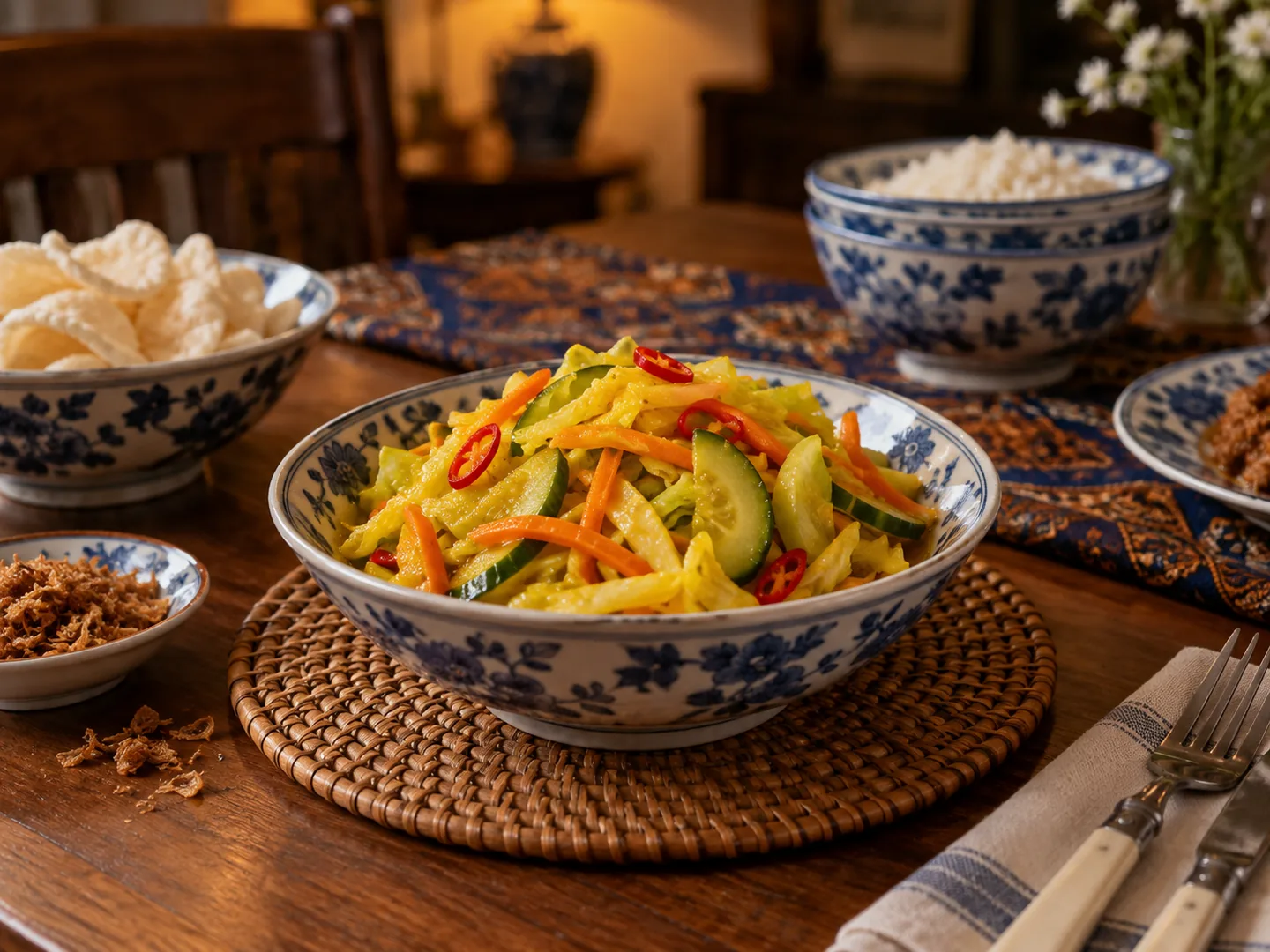
Atjar Tjampoer (Pickled Vegetable Relish)
Atjar tjampoer
A bright turmeric pickle of crisp vegetables in a sweet-sour brine: the Indonesian acar that cuts the richness of the Dutch-Indo rijsttafel.
 Borrel
Holland
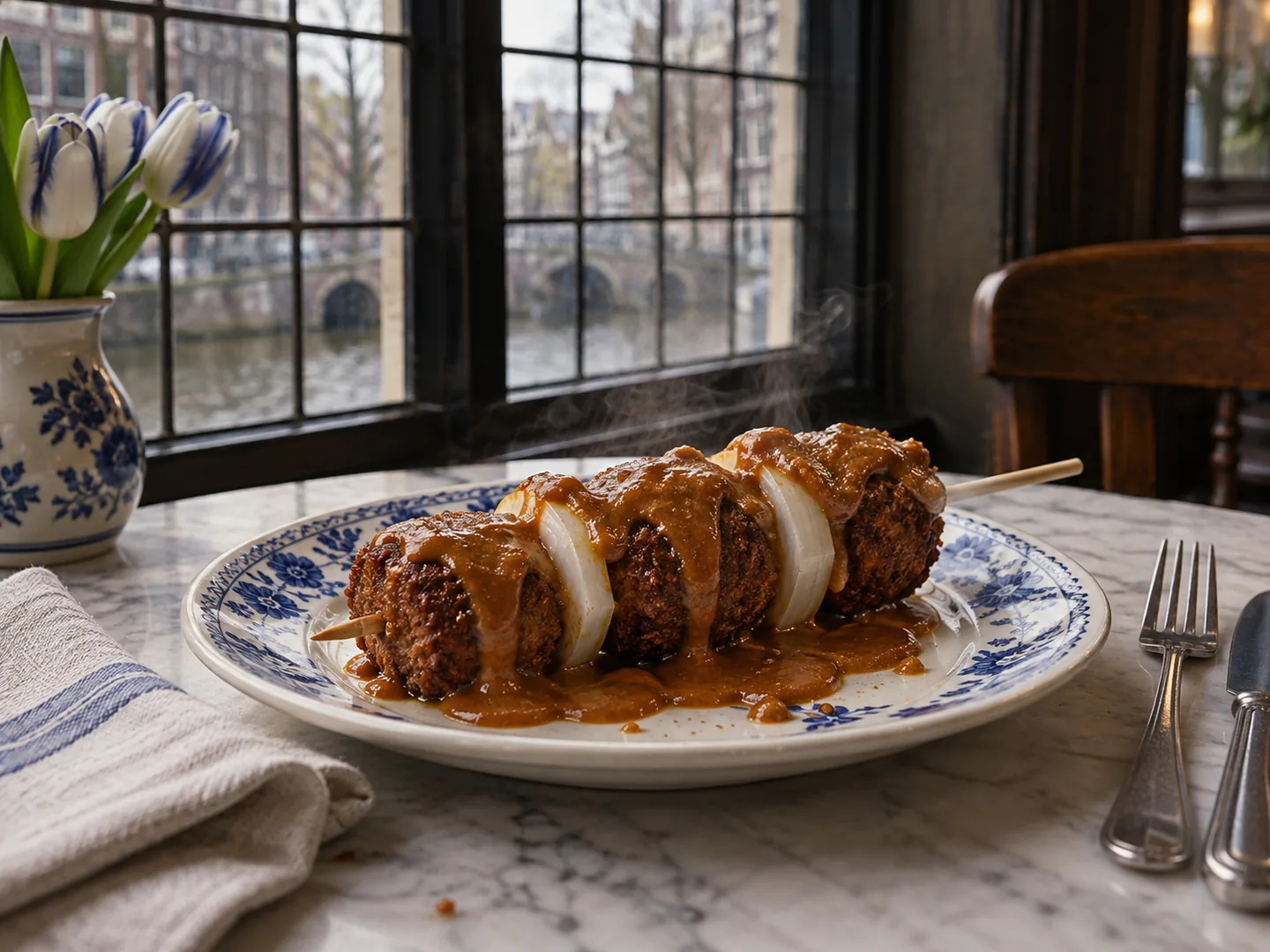
Berenhap (Meatball & Onion Skewer)
Berenhap
The "bear bite": a snackbar skewer of fried gehaktbal and raw onion, drenched in satésaus, the Dutch peanut sauce, and eaten straight from the stick.
 Borrel
Holland
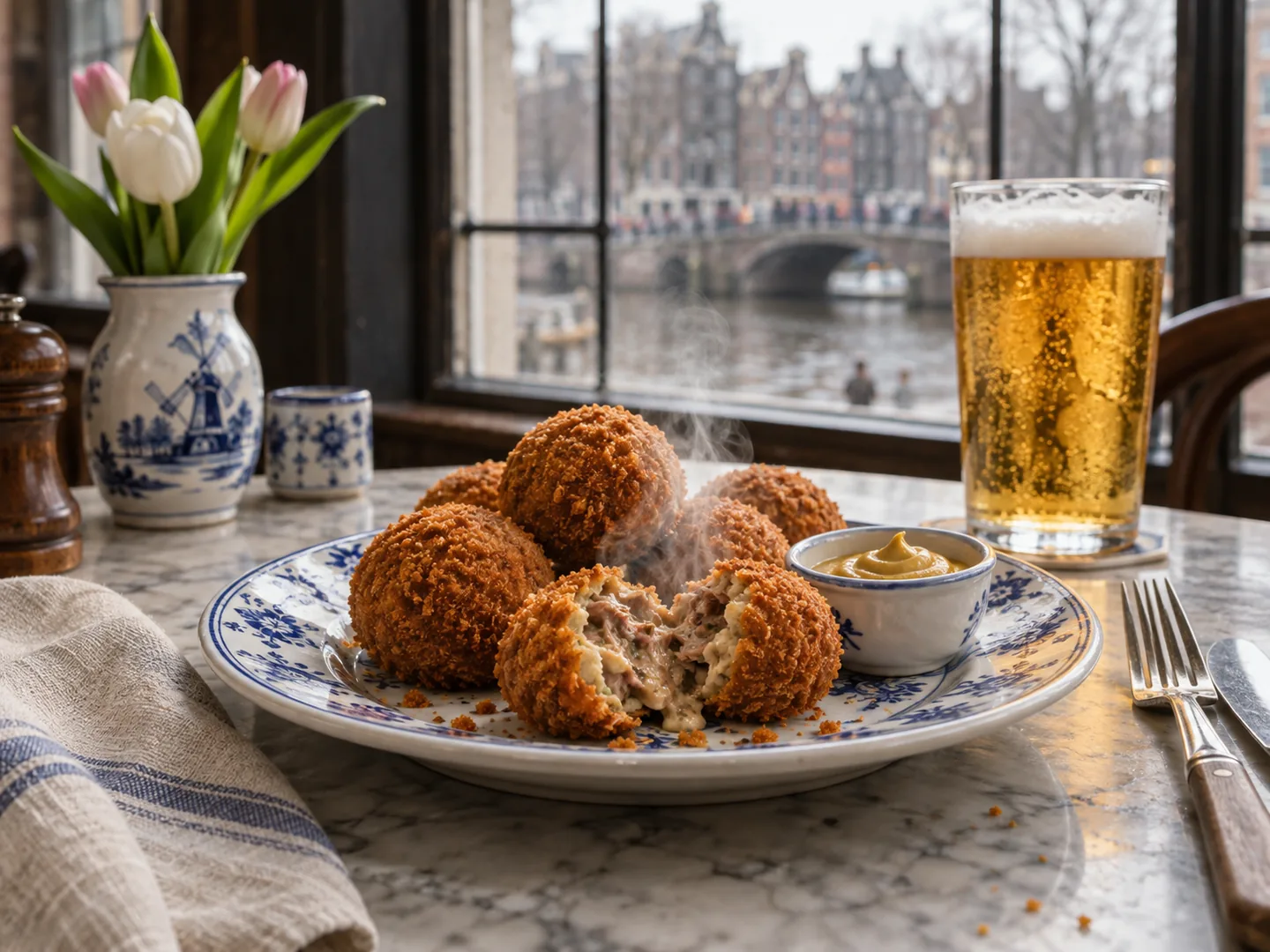
Bitterballen (Crisp Ragout Croquettes)
Bitterballen
The crown of the Dutch borrel: crisp breadcrumbed spheres of slow-cooked beef ragout that ooze when you bite them, served with sharp mustard and cold beer.