Mihoen Goreng (Fried Rice Vermicelli)
Mihoen goreng
Thin rice vermicelli wok-fried with chicken, prawns, cabbage and a splash of ketjap: the lighter sibling of bami goreng on every Chinees-Indisch menu.
 IBread & the Broodmaaltijd
- Prep
- 25 min
- Cook
- 15 min
- Serves
- 4
- Level
- Beginner
On a Chinees-Indisch takeaway menu, mihoen goreng usually sits a line or two below bami goreng, and plenty of regulars never read that far. They are missing the lighter dish of the pair. Mihoen is rice vermicelli, the thin, brittle white noodle sold in folded nests, and fried in a hot wok it turns tangled and faintly springy, taking colour from the ketjap without ever getting heavy.
A noodle from the Chinese-Indonesian kitchen
The name is the Dutch spelling of the Indonesian bihun or mihun. Rice noodles reached the archipelago with Chinese cooks and traders, and fried rice vermicelli is everyday food in Indonesia and across much of Southeast Asia. In the Netherlands it came in with the Indo community and the Chinese-Indonesian restaurants that opened in town after town from the 1960s, where it found its place as the alternative to bami. Many takeaways offer it as a dish of its own and as a noodle base for their combination plates.
Soak, don't boil
The one technique worth learning is restraint with water. Dried mihoen needs only a soak in warm water until it goes limp and white. Boil it and it turns to paste in the wok. Drain it well and cut through the nest a few times with scissors, so you are tossing loose lengths rather than one knot.
After that the wok does the work. Sear the meat and prawns first and lift them out, fry the aromatics and vegetables hard, then add the noodles with the soy and ketjap. Rice vermicelli soaks up liquid fast, so the stock goes in a splash at a time until the strands are glossy and move freely in the pan.
Mihoen goreng is bami goreng with the weight taken out: the same wok, the same ketjap manis, a lighter noodle.
A good plate smells of garlic and toasted soy, with ribbons of egg and a green lift from celery leaf running through the pale noodles. Serve it with sliced cucumber and a spoon of sambal, and let everyone add their own fried shallots.
“Add the stock in splashes, never all at once. Rice vermicelli drinks liquid fast and goes from dry to soggy in seconds.”
Ingredients
Serves 4
The noodles
- 250 gdried rice vermicelli (mihoen)
- 1 litrewarm water, for soaking, not boiling
The aromatics
- 3shallots, finely sliced
- 3garlic cloves, finely chopped
- 1red chilli, sliced, or 1 tsp sambal oelek
- 2 cmfresh ginger, grated
The stir-fry
- 2chicken thighs, boneless, sliced thin
- 150 graw peeled prawns
- 150 gwhite cabbage, finely shredded
- 1carrot, julienned
- 1small leek, sliced into thin rings
- 100 gbeansprouts
- 2eggs, beaten with a pinch of salt
- 3 tbspneutral oil
The seasoning
- 2 tbsplight soy sauce
- 1.5 tbspketjap manis, sweet soy
- 1 tbspoyster sauce, optional
- 0.5 tspground white pepper
- 100 mlchicken stock, added in stages
To finish
- 2 tbspChinese celery or celery leaf, chopped
- to servefried shallots
- to servesliced cucumber, sambal and kroepoek
Method
- 1
Soak the vermicelli
Cover the dried mihoen with warm tap water and leave it for 5 to 10 minutes, until the strands turn white and limp but still have a little bite. Drain well in a colander and snip through the tangle a few times with scissors. Boiling it first is the classic mistake: it goes to paste in the wok.
- 2
Make a thin omelette
Heat a film of oil in the wok, pour in the beaten eggs and swirl them into a thin sheet. Once set, roll it up, slice into ribbons and set aside. Egg ribbons stay distinct in the finished dish, where scrambled egg would vanish into the noodles.
- 3
Sear the chicken and prawns
Get the wok very hot with a tablespoon of oil and cook the chicken until golden, then add the prawns for the last minute until just pink. Lift everything out. Cooking the protein first and separately keeps it seared rather than stewed.
- 4
Fry the aromatics and vegetables
Add the remaining oil and fry the shallots, garlic, chilli and ginger for a minute until fragrant. Add the cabbage, carrot and leek and toss over high heat until they wilt at the edges but keep their crunch.
- 5
Toss in the noodles
Add the drained mihoen with the soy, ketjap manis, oyster sauce and pepper. Toss with tongs or long chopsticks, adding the stock a splash at a time until the strands are glossy and loose rather than dry and snapping. Return the chicken, prawns and egg with the beansprouts and toss once more.
- 6
Finish and serve
Taste for salt and heat, then fold through the celery leaf. Pile onto plates, scatter with fried shallots, and serve with cucumber, sambal and a few kroepoek on the side.
Building the bread meal
The Dutch lunch is a spread, not a dish — bread and a parade of toppings.
- Jonge & belegen kaas, young and aged Gouda, sliced thin
- Hagelslag, chocolate sprinkles for the sweet slice
- Boiled egg & ham, the savoury half of the board
- Karnemelk, a glass of cold buttermilk
Questions from the kitchen
What is the difference between mihoen and bami?+
Bami is a wheat-and-egg noodle, thicker and chewier. Mihoen is rice vermicelli, thin and light, made from rice flour and water. Both get the same wok and ketjap treatment, but mihoen goreng eats lighter and paler.
Why does my mihoen break into short bits?+
It was soaked too long or in water that was too hot, or it was tossed too hard before the liquid went in. Soak just until pliable, drain well, and toss with tongs in a lifting motion rather than stirring.
Can I make it vegetarian?+
Yes. Leave out the meat and prawns, skip the oyster sauce, add firm tofu and extra vegetables, and use vegetable stock. The soy and ketjap carry most of the flavour.
Paint the rest of the meal
 Bread
The Indies at Home
Foe Yong Hai (Dutch-Chinese Omelette in Sweet-Sour Sauce)
Foe yong hai
A thick, puffed omelette with prawns and spring onion under a glossy red tomato sauce with peas, made the way a Dutch Chinese takeaway serves it.
 Bread
The Indies at Home
Nasi Rames (Rice with a Plate of Side Dishes)
Nasi rames
White rice ringed with small sides: rendang, sambal goreng boontjes, atjar, serundeng and an egg in chilli sauce. The rijsttafel on one plate, takeaway style.
 Bread
The Indies at Home
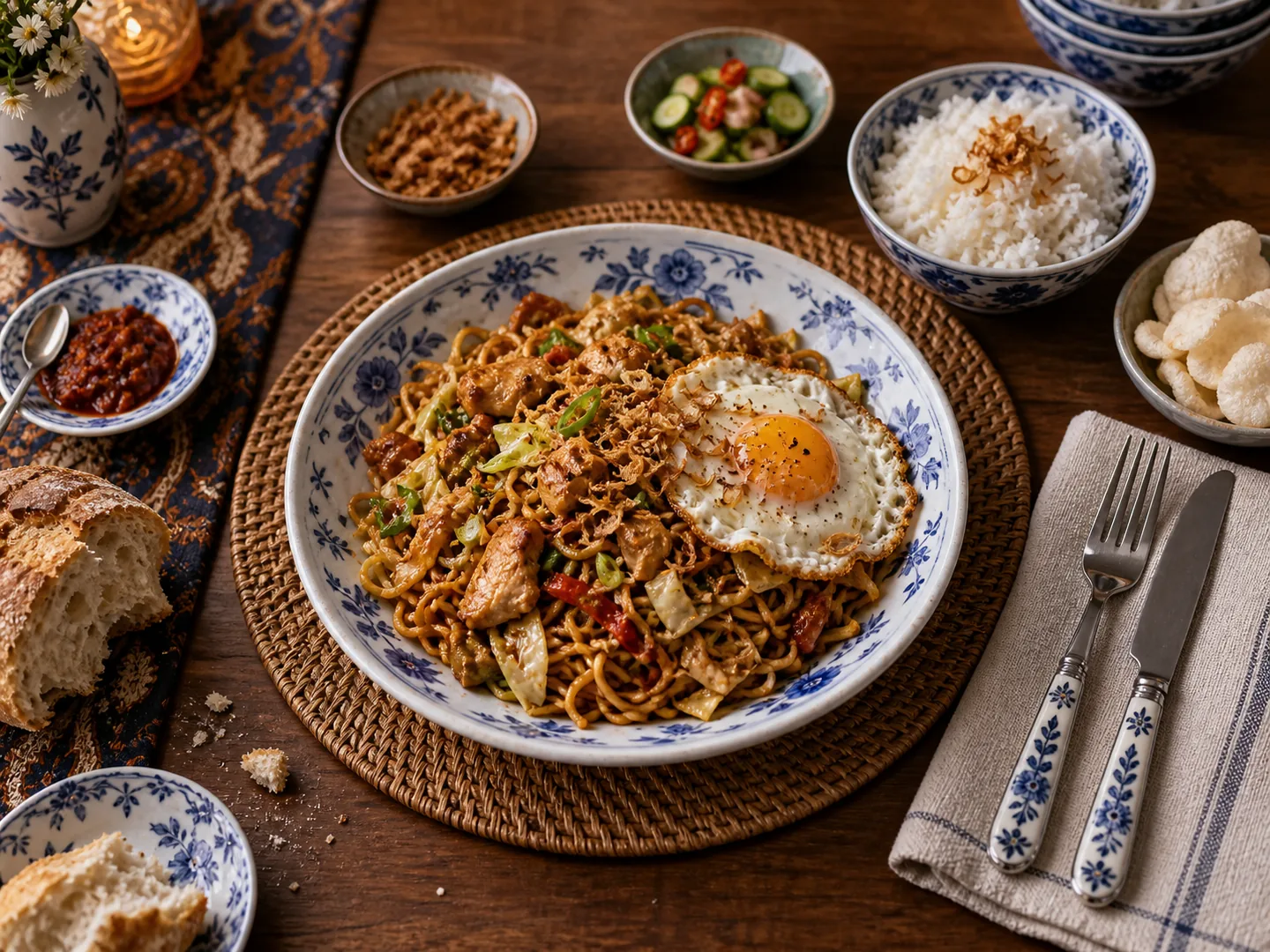
Bami Goreng (Indo-Dutch Fried Noodles)
Bami goreng
The fried egg noodles that came home from the Indies, wok-tossed with a spiced bumbu, ketjap manis, chicken and cabbage, and served across the Dutch table beside nasi.