Nasi Rames (Rice with a Plate of Side Dishes)
Nasi rames
White rice ringed with small sides: rendang, sambal goreng boontjes, atjar, serundeng and an egg in chilli sauce. The rijsttafel on one plate, takeaway style.
 IBread & the Broodmaaltijd
- Prep
- 30 min
- Cook
- 40 min
- Serves
- 4
- Level
- Intermediate
Order nasi rames at a Chinees-Indisch takeaway and you get the rijsttafel folded onto a single plate. A mound of rice sits in the middle, and around it come small portions, each one a dish of its own: a spoon of meat in dark sauce, some sambal goreng boontjes, a little atjar for sharpness, a scatter of serundeng, and an egg, either simmered in chilli sauce or fried on top.
The rijsttafel for one
Rames means mixed, and in Indonesia nasi rames is ordinary food: rice with portions of whatever the cook has made that day, much like nasi campur. The colonial rijsttafel took that everyday habit and multiplied it into a banquet of many bowls. Nasi rames is the other direction. In the Netherlands it became the order for someone eating alone who still wants a bit of everything, and it has stayed on Chinees-Indisch menus ever since those restaurants spread through Dutch towns from the 1960s.
It is Indonesian at heart, and the dishes on the plate prove it. Our recipes for rendang, sambal goreng boontjes, atjar tjampoer and serundeng each stand on their own, and this page shows how to put them together, with the rice and the eggs in chilli sauce that tie the plate up.
Balance, not quantity
The skill in nasi rames is in the choosing. Every plate needs one rich element, usually a slow-cooked meat, and something green in coconut milk. It also needs a sour, crunchy pickle to cut through the fat and something dry and toasty to scatter over the rice. The egg adds a soft, yolky note of its own.
A good nasi rames has something rich, something sour, something crisp and something hot, and never lets one of them take over.
Most of the work happens the day before, which makes it a calm dish to serve. On the day, cook the rice, simmer the eggs in their sambal sauce and warm the meat. Then spoon each side onto the plate separately, so every forkful can be a different combination, finished with fried shallots and a few kroepoek.
“Keep each side in its own spoonful. The pleasure of nasi rames is choosing what goes on each forkful, so the plate should never look stirred together.”
Ingredients
Serves 4
The rice
- 350 gjasmine rice, rinsed until the water runs clear
- 450 mlwater
- 0.5 tspsalt
- 1pandan leaf, knotted, optional
Sambal goreng telor (eggs in chilli sauce)
- 4eggs, boiled 8 minutes and peeled
- 4shallots
- 2garlic cloves
- 2red chillies, or 1 tbsp sambal oelek
- 0.5 tsptrassi (shrimp paste), toasted
- 2 cmgalangal (laos), bruised
- 1salam leaf, or a bay leaf
- 200 mlcoconut milk
- 1 tsppalm sugar or brown sugar
- 1 tbspneutral oil
The sides (made ahead)
- 400 grendang, see our rendang recipe, or another meat in sauce
- 300 gsambal goreng boontjes, see our recipe
- 150 gatjar tjampoer, see our recipe
- 4 tbspserundeng, see our recipe
To serve
- to servekroepoek (prawn crackers)
- to servefried shallots and sambal oelek
Method
- 1
Plan the plate
Nasi rames works when most of it is ready before the rice goes on. Make the rendang, sambal goreng boontjes, atjar and serundeng a day ahead; rendang and atjar both improve for it. On the day, only the rice and the eggs need cooking.
- 2
Cook the rice
Put the rinsed rice, water, salt and pandan in a heavy pan, bring to the boil, then cover tightly and cook on the lowest heat for 12 minutes. Take it off the heat and leave it covered for 10 minutes more. Resting finishes the grain evenly, so the rice is tender and separate rather than wet.
- 3
Make the sambal sauce
Pound or blend the shallots, garlic, chillies and trassi to a paste. Fry it in the oil with the galangal and salam leaf for 3 to 4 minutes, until it darkens slightly and the raw smell of shallot is gone. Pour in the coconut milk, add the sugar and a pinch of salt, and simmer until thick enough to coat a spoon.
- 4
Add the eggs
Score the peeled eggs lightly so the sauce can cling, lower them into the pan and simmer for 5 minutes, spooning the sauce over them. Halve them just before serving so each plate gets a cut face of yolk.
- 5
Build the plate
Warm the rendang and boontjes through. Mound the rice in the middle of each plate and arrange the sides around it in separate spoonfuls, not mixed: meat and sauce, beans, a heap of cold atjar, a halved egg in its sambal. Scatter serundeng over the rice and finish with fried shallots, sambal and kroepoek.
Building the bread meal
The Dutch lunch is a spread, not a dish — bread and a parade of toppings.
- Jonge & belegen kaas, young and aged Gouda, sliced thin
- Hagelslag, chocolate sprinkles for the sweet slice
- Boiled egg & ham, the savoury half of the board
- Karnemelk, a glass of cold buttermilk
Questions from the kitchen
What does rames mean?+
Rames means mixed. In Indonesia nasi rames, much like nasi campur, is rice served with small portions of whatever dishes the cook has made that day.
What is the difference between nasi rames and rijsttafel?+
A rijsttafel spreads many dishes across a table for a group to share. Nasi rames puts a smaller selection on one plate for one person, which is why it became a takeaway order.
Can I use fried rice instead of white rice?+
Many Dutch takeaways offer the plate on either white rice or nasi goreng. White rice lets the sides speak; nasi goreng makes for a heavier, more savoury plate.
Which sides can I swap?+
Almost any. Semur or kip ketjap can stand in for rendang, a fried egg can replace the eggs in sambal, and a simple cucumber pickle will do if you have no atjar. Aim for one rich, one sour and one crisp element.
Paint the rest of the meal
 Bread
The Indies at Home
Foe Yong Hai (Dutch-Chinese Omelette in Sweet-Sour Sauce)
Foe yong hai
A thick, puffed omelette with prawns and spring onion under a glossy red tomato sauce with peas, made the way a Dutch Chinese takeaway serves it.
 Bread
The Indies at Home
Mihoen Goreng (Fried Rice Vermicelli)
Mihoen goreng
Thin rice vermicelli wok-fried with chicken, prawns, cabbage and a splash of ketjap: the lighter sibling of bami goreng on every Chinees-Indisch menu.
 Bread
The Indies at Home
Bami Goreng (Indo-Dutch Fried Noodles)
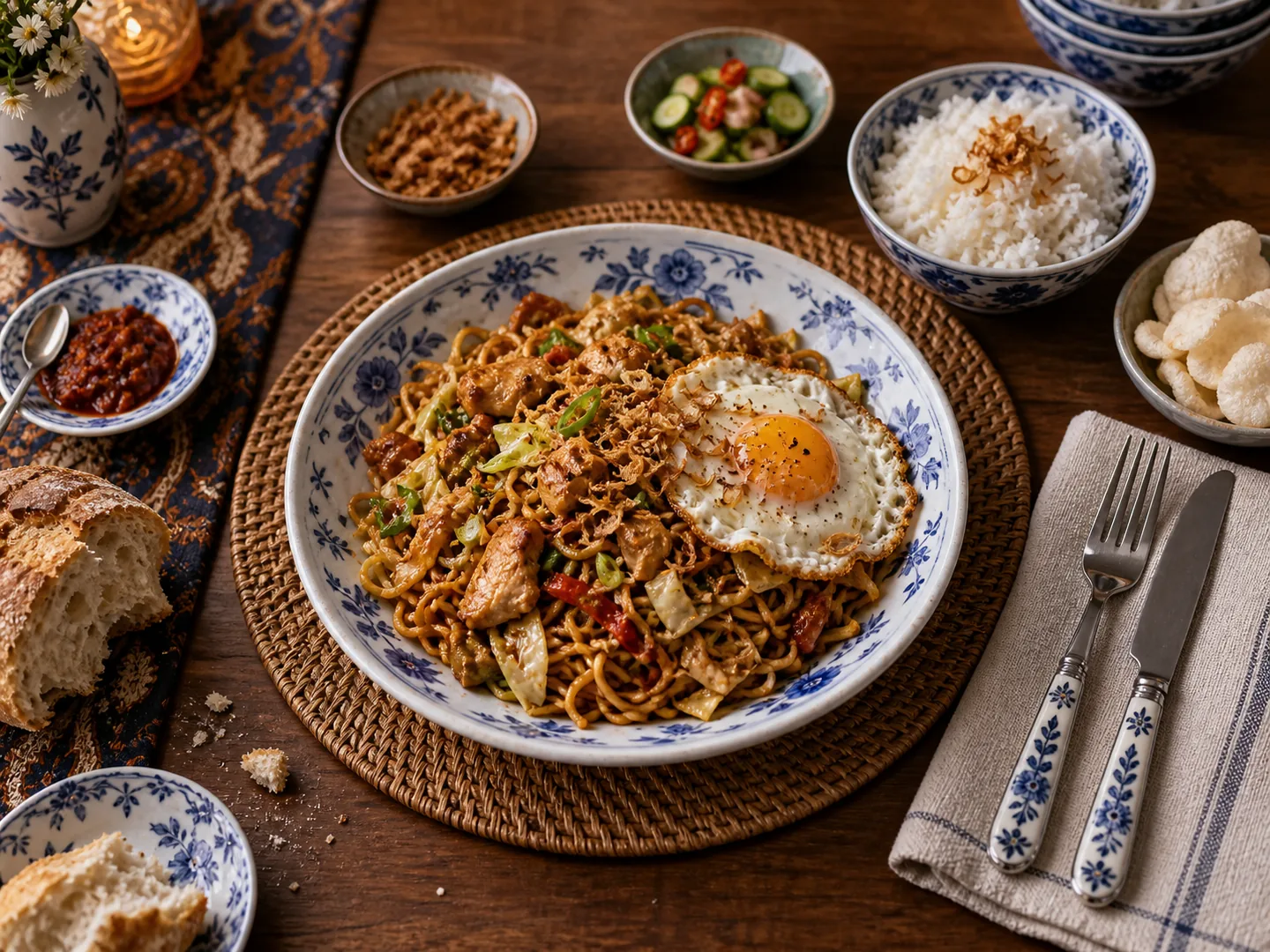
Bami goreng
The fried egg noodles that came home from the Indies, wok-tossed with a spiced bumbu, ketjap manis, chicken and cabbage, and served across the Dutch table beside nasi.